By Jeff Reibman
For over 25 years, Jeff has been working in the Seattle area with a focus on residential design. He has a particular interest in working with senior and affordable housing developers and organizations to help them maximize their financial capabilities and turn them into safe, healthy affordable homes.
This year marks the 10th anniversary of Raven Terrace‘s grand opening. This project was one of WT’s first affordable housing projects and the anniversary gives us an opportunity to reflect on how affordable housing in our region has changed over the years.
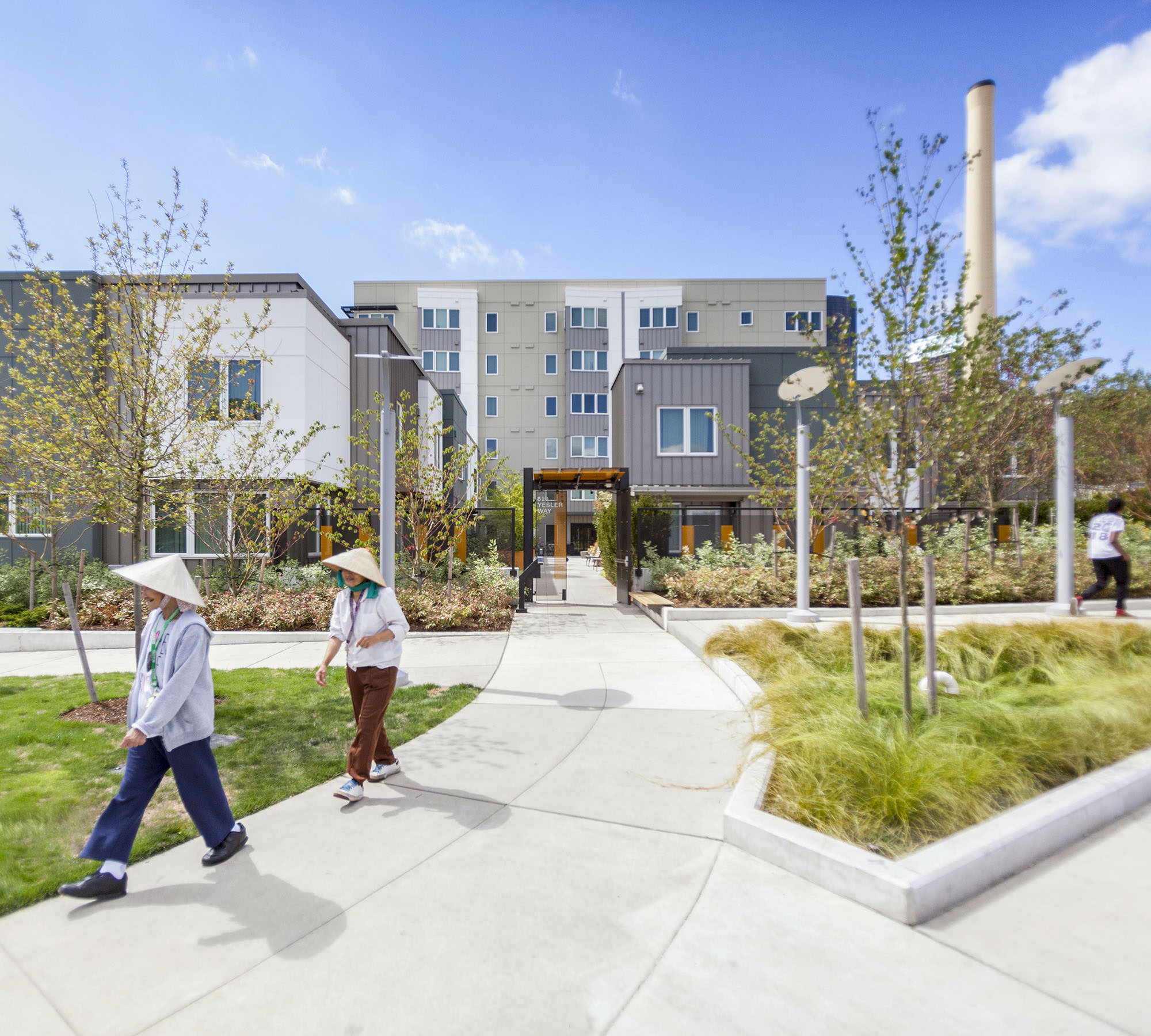
Raven Terrace at Yesler Terrace is the first low-income housing development in the master planned Yesler Terrace neighborhood.
A Seattle Housing Authority project, Raven Terrace was the first affordable multifamily building completed in the redevelopment of Yesler Terrace, Seattle’s first publicly subsidized housing community.
The original structures of Yesler Terrace, built to house war workers in the 1940s, provided hundreds of affordable family units for decades. Honoring the longstanding needs of the community, Raven Terrace was designed to replace those older family units and then some, adding density while blending into the neighborhood’s diversely layered context.
The building empowers the families who support the neighborhood fabric by providing in-home daycare units, a multifunction room for community meetings, and multi-bedroom units grouped around common areas, so families are near one another. These design decisions were informed by residents’ needs identified through extensive community engagement efforts.
A Decade of Change
Affordable Housing Initiatives
Since the completion of Raven Terrace in 2016, the median home prices in Seattle have nearly doubled, making it increasingly difficult for many, especially families, to afford homes in the city. To address growing public concern around affordability, the city’s focus has been primarily on how much housing we can produce.
Through the Mandatory Housing Affordability (MHA) and Multifamily Property Tax Exemption (MFTE) Programs, new market-rate developments have included affordable housing units in high amenity market rate projects, typically skewed towards studios and 1-bedrooms. Meanwhile, public funders have often prioritized the lowest cost-per-unit projects when allocating subsidies, further pushing smaller unit production. This has resulted in an overproduction of smaller units across the market, leaving family-sized housing out of the equation.
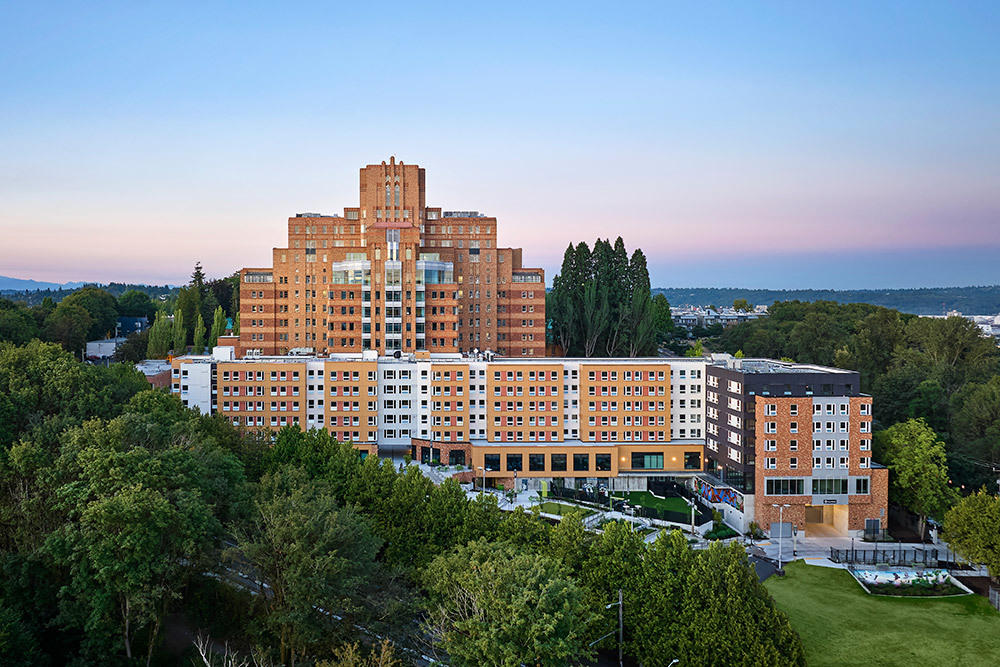
Developed by SCIDpda, Beacon Pacific Village offers 160 affordable family-sized units, an early learning center for children, and on-site elderly support services.
Beacon Pacific Village, completed in 2024, emerged as one response to this challenge, turning the unit metric count on its head by challenging the dollars-per-unit approach to affordable housing. Through advocacy efforts and a deliberate campaign, funders were asked to consider the comparisons between dollars per unit and dollars per person housed. Multibedroom units meet the gap in family sized housing and are more effective in providing housing on a dollar per occupant basis, which drove the decision to put dollars where they mattered most.
Over 50% of the project’s 160 units have 2-, 3-, or 4-bedrooms, directly addressing the critical shortage of long-term affordable options for families. These units also allow for multi-generational living, supporting Beacon Pacific Village’s commitment to keep communities in the neighborhoods they’ve called home for generations.
A positive sign of this continued shift in our region is Trailhead, currently under construction in Issaquah, which also incorporates a strong mix of larger family-sized units.
Amenities and Partnerships
Beyond the units, the amenities and partnerships that can be woven into affordable housing projects are essential to supporting the community they house. Applying successful strategies to improve the lives of residents, projects like Arbora Court, Orenda, The Rise on Madison/Blake House, and Patsy Surh Place exemplify lessons learned since Raven Terrace.
Arbora Court, 2018

Arbora Court, developed by Bellwether Housing, provides 133 affordable units for families.
Arbora Court’s focus on families drove the design of a courtyard and play structure located near the family-sized units, laundry facilities, and community room. This configuration allows parents to keep an eye on their children playing next door, reinforcing a sense of safety.
Orenda, 2021

Located within the future “Othello Square” campus at the corner of South Othello Street and Martin Luther King Way in Seattle, Orenda provides 176 units of workforce housing.
At Orenda, neighborhood workforce housing is atop the Odessa Brown Children’s Clinic and Tiny Tots, an early learning childcare facility. Helping to minimize displacement in the Othello neighborhood, Orenda’s programming benefits residents and the larger community.
The Rise on Madison/Blake House, 2023
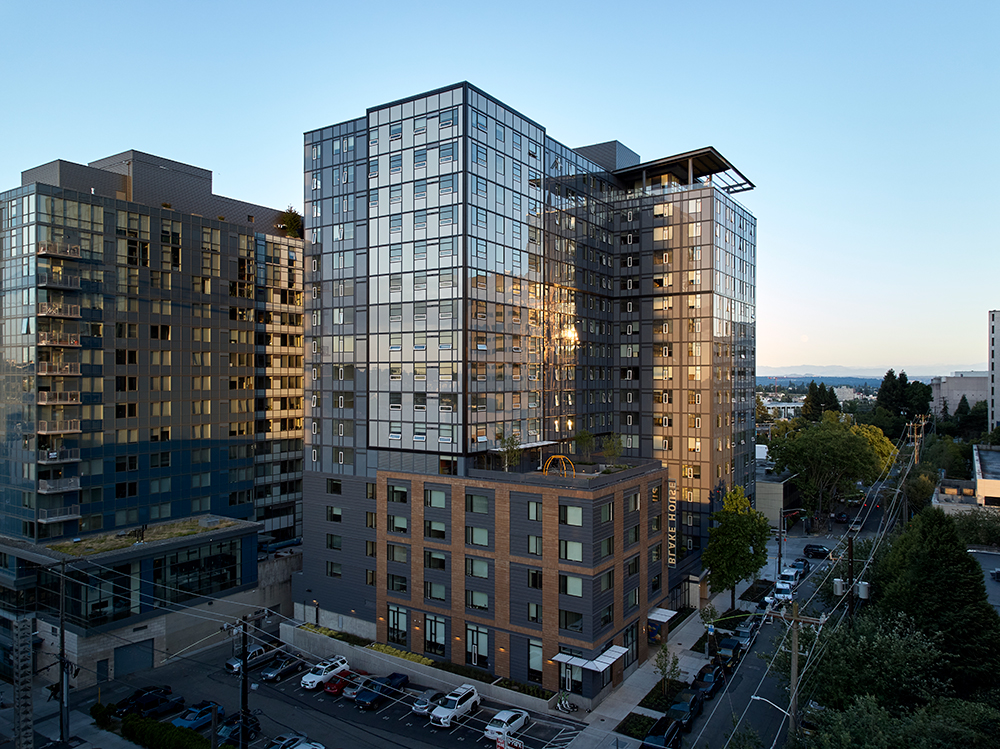
Centrally located in Seattle’s First Hill neighborhood, The Rise on Madison / Blake House adds over 350 much needed affordable housing units.
The Rise on Madison/Blake House, was created through a strategic partnership between Bellwether Housing and Plymouth Housing. They seized an opportunity to build the first affordable high-rise in Seattle in over 50 years. Combining separate funding sources into a single structure allowed for a larger, more efficient high-rise building that provides 365 units for seniors who’ve experienced chronic homelessness alongside affordable housing for families and low-wage workers.
Patsy Surh Place, 2025
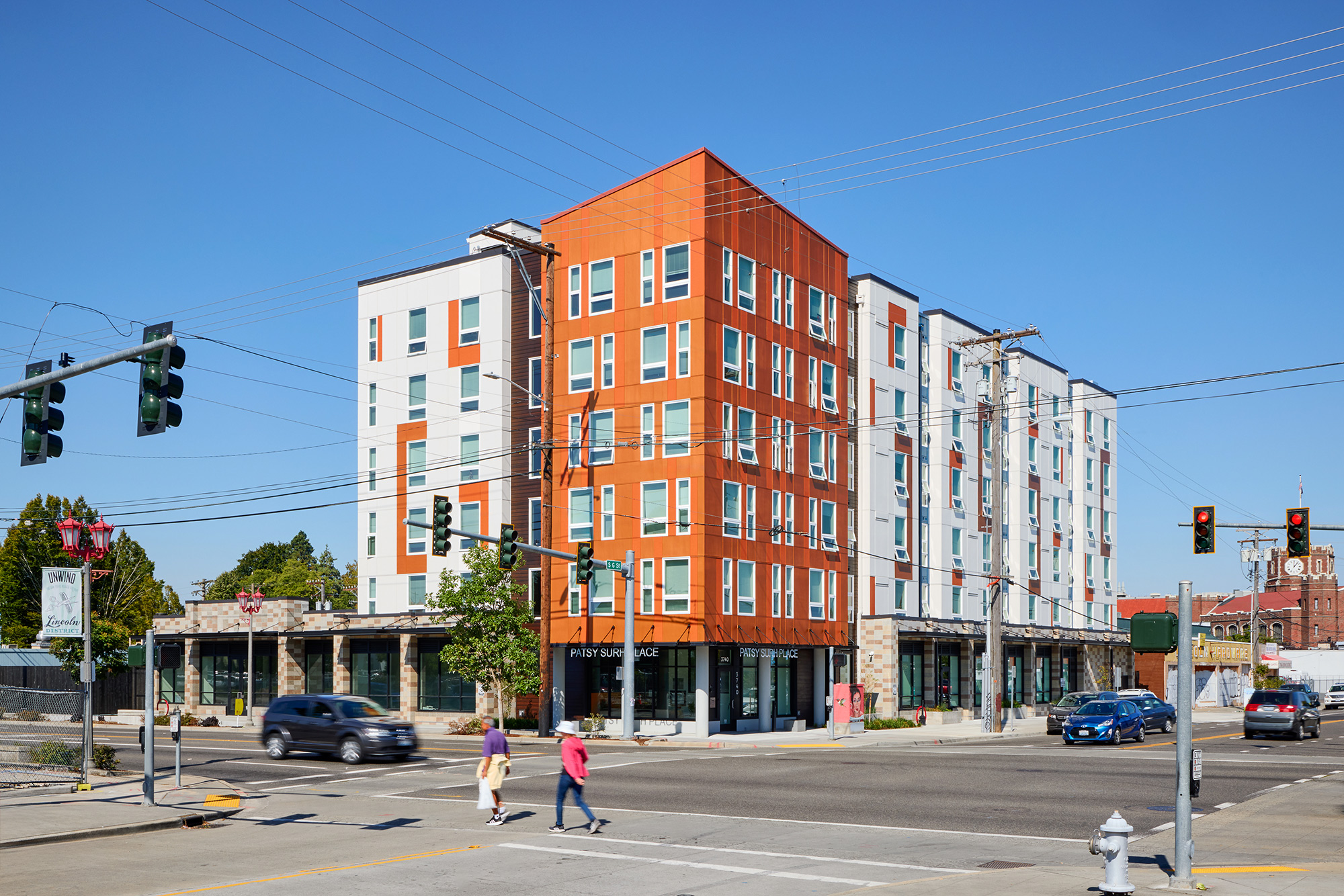
Phase 1 includes 78 affordable homes for formerly homeless Asian and Pacific Islander seniors, along with other seniors in need. Phase 2 will follow with 75 affordable units for families.
Outside Seattle, Patsy Surh Place in Tacoma, developed in partnership by the Low Income Housing Institute (LIHI) and the Asian Pacific Cultural Center (APCC), provides affordable housing for Asian and Pacific Islander seniors. The project pairs housing with shared community spaces and culturally responsive programming to support aging in place and strengthen community connection.
Continuing the Momentum
New affordable housing developments are utilizing creative solutions, continuing the momentum first seen in projects like Raven Terrace to stabilize our most vulnerable communities. Let’s continue that work by building more family-sized units in market-rate and affordable housing developments, advocate for public funders to look beyond the unit/dollar metric, and recognize that we need to design buildings that meet the market need at all income levels, especially in publicly funded projects, and create healthy, vibrant communities that are an asset to our neighborhoods.