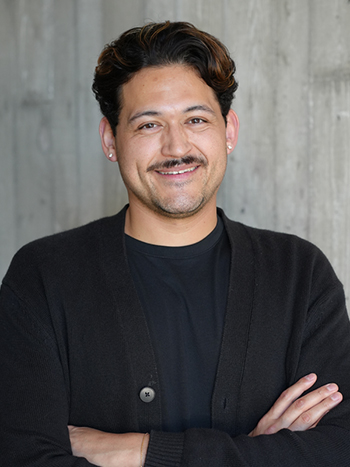
 From student to intern, to full-time employee, to teacher, Noah Scanlan has seen his career come full circle with his return to the University of Washington this fall.
Noah started at WT as an intern in 2024 while completing his Master of Architecture at the University of Washington. Today, he’s a full-time employee at WT, working in construction administration while also helping with tenant improvement projects. Starting in October 2026, he’ll return to UW as a part-time lecturer for Architectural Design and Representation I, an undergraduate course where students will learn the basics of hand drawing and model making to begin developing their understanding of architectural space and scale.
We chatted with Noah to learn more about his path to teaching, his upcoming course, and what he’s looking forward to in the coming quarter.
As you progressed through your career, was there a moment when you first thought, “I’d like to teach”?
Noah: There were several, so it’s hard to pick just one! I’m always learning to become a better designer myself, but I also like sharing my knowledge with other people to help them understand things more clearly too. And just like everyone who enjoys teaching, I love the moment of clarity when someone finally “gets it.” I also have a few teachers in my family, so it might be a genetic thing.
What’s something you’re bringing from your work at WT directly into the classroom?
Noah: Because I’m working on CA and a handful of TI projects, I have had some good exposure to the art and science of construction documents. I want to share this knowledge with my students and show them that even the most technical documents in architecture still have room for storytelling. Who knows? Maybe I’ll start a new class at UW someday: “Technical Representation,” or something like that.
Is there anything that practicing architecture/design has taught you that textbooks can’t?
Noah: Practicing architecture has helped me understand the scale of our decisions. Some of the smallest things in a project can have huge effects in many ways. We focus a lot on broad strokes and big gestures in school, but practicing in an office has shown me that minor adjustments or thinking about details earlier can have huge benefits down the road. And, not doing so can create a lot of headaches too!
At the end of the quarter, what do you hope students take away from the class?
Noah: Since this is the students’ first representation course, I hope they will walk away with a strong foundation in drawing fundamentals and appreciate how important hand drawing is to our profession. The students will also be creating work for their portfolios that they will eventually use for school applications, so I’m also excited to help them begin that process too.